About Black Maple (Acer nigrum)
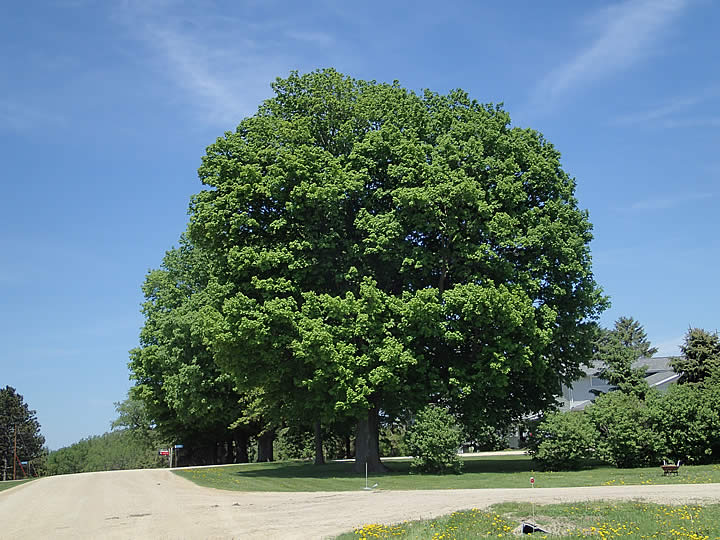
Summary
Identifying Features
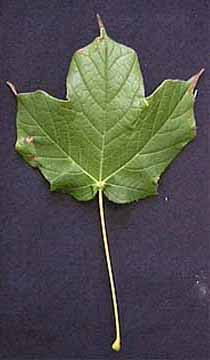
Leaves are opposite on the stem and typically three-lobed, with each lobe tapering to a point. Leaves have smooth/wavy margins and drooping sides. Coloration is dark green from above, with a yellowish-green underside. In autumn, the leaves are colored yellow, orange or deep red
Leaf of a black maple:
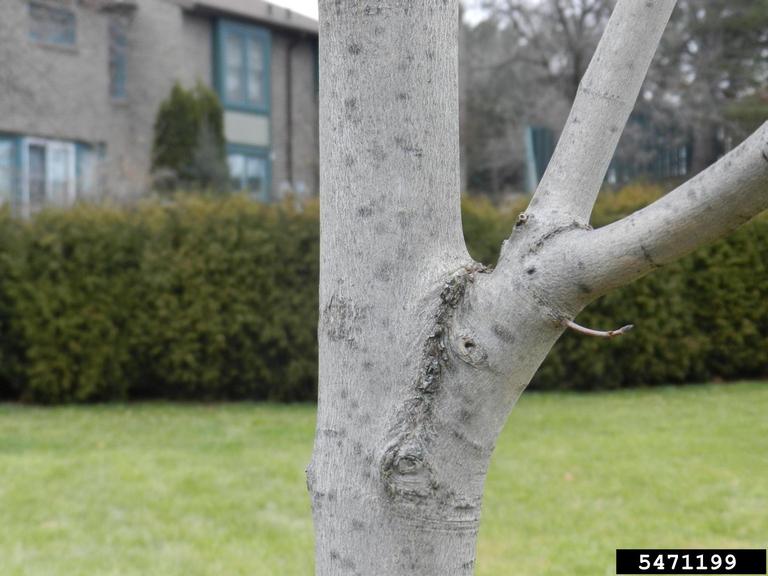
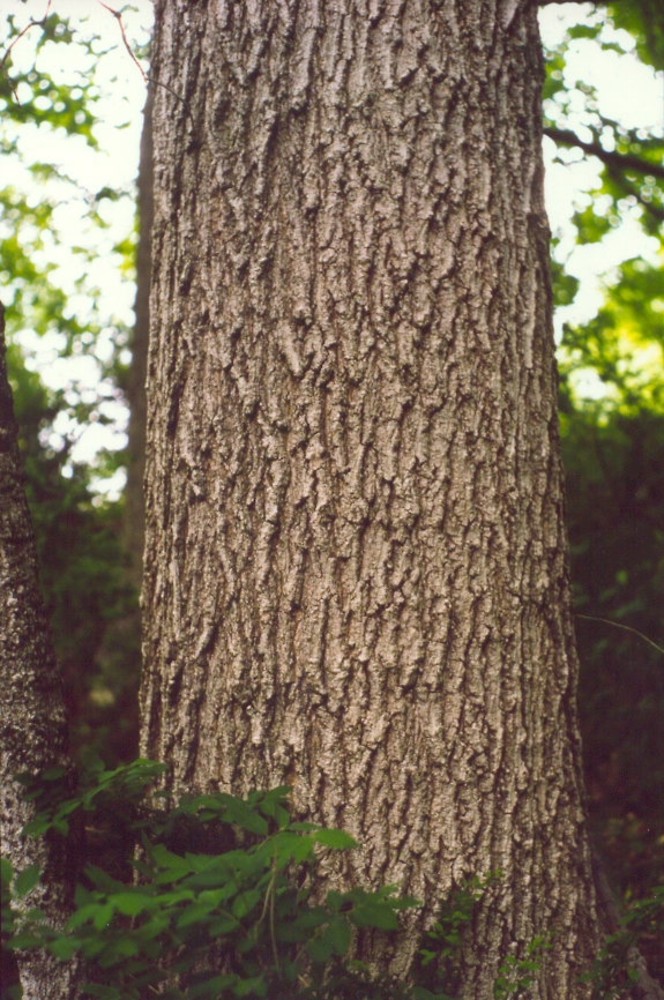
The bark of black maples vary with age. Younger trees have thin, smooth and pale/gray bark. Older bark will be dark and have deep furrows.
Bark of a young black maple:
Bark of an old black maple:
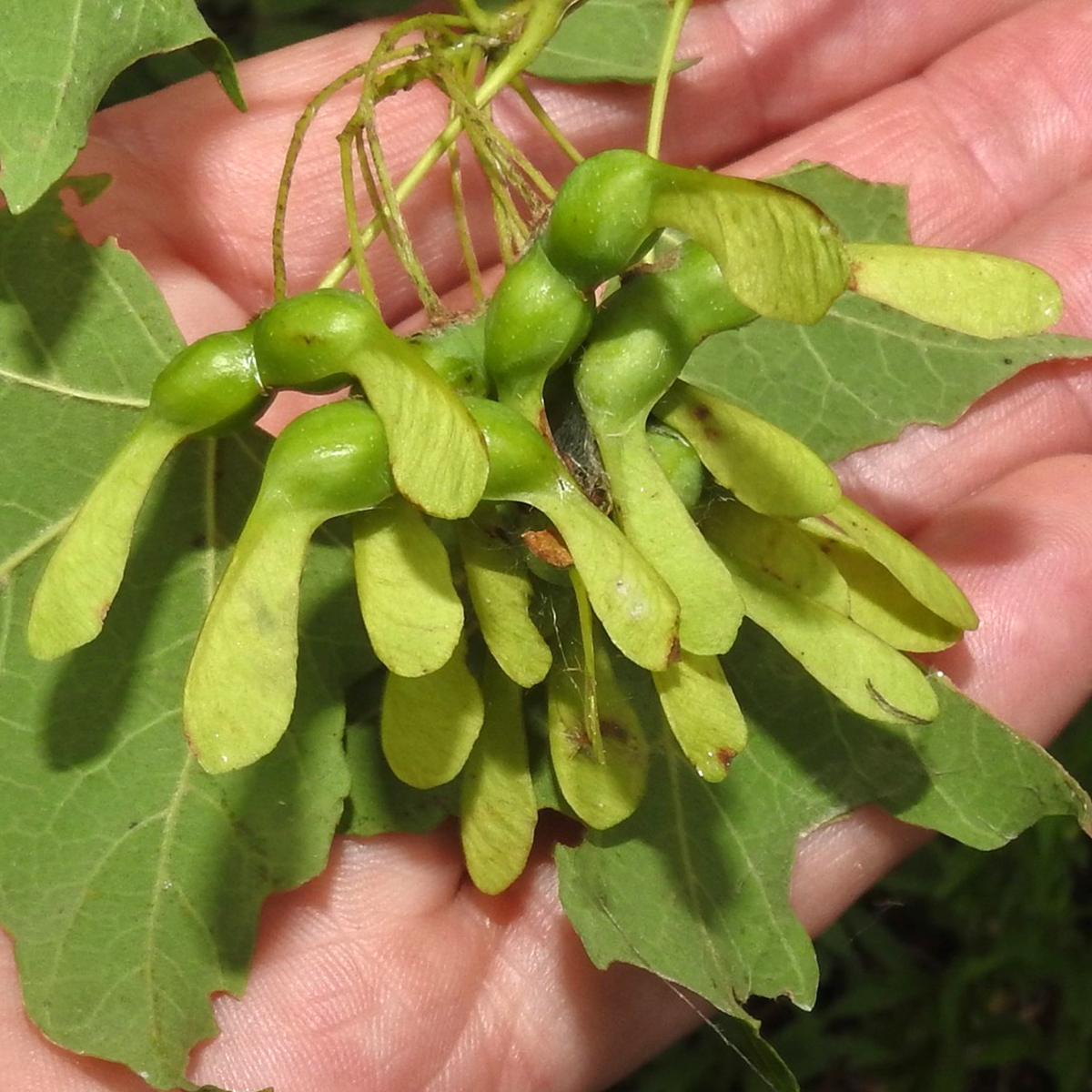
The seeds are reffered to as samara, which is a type of seed with a flatted wing that aids in dispersal. The Samara occur in double-winged, U-shaped pairs. The wings are about an inch long and diverge slightly more than a sugar maple’s. A smooth, bright red-brown seed is encased at the base of each wing.
-Samara of a black maple
Ecological Services
Black maples provide valuable ecological services through its role in forest ecosystems and landscapes. Its deep, extensive roots help stabilize soil and prevent erosion. As a shade-tolerant species, it contributes to forest structure and supports plant diversity in the understory. The trees also play a role in nutrient cycling and water regulation. Black maples also provide provisioning services to people, including high-quality hardwood used in furniture and flooring, as well as sap that can be tapped for maple syrup production.
Animal Uses and Relationships
- Beavers and porcupines eat the wood and bark of black maple trees
- White tailed deer eat the twigs and foliage
- Seeds are eaten by voles, white footed mice, squirrels, chipmunks and many others
- Squirrels and birds nest in the cavities of old black maples
- Southern flying squirrels feed on the sap of black maples
- Some species of bats use the trees as root trees and as maternity colonies
Fun Facts
- Black maples can be tapped for their sap and turned into maple syrup
- Black maple wood is often used for hardwood flooring, baseball bats and more
- Black maples can thrive in an urban environment
- Ground nesting bees utilize the flowers produced by black maples
Indigenous History/Uses
- Used sap to create maple syrup and sugar for food, as well as medicinal purposes and trade
- The hard, strong wood was utilized for weapons and tools, in particular spoons, bowls and bows
- The bark was used to create medicinal teas
Conservation
The status of black maples globally and nationally is secure.
References
Black Maple. Black maple (Acer nigrum). (6AD). https://illinoiswildflowers.info/trees/plants/black_maple.html
Blake, A. (n.d.). Black maple: Rooting for the underdog. LEAF. https://www.yourleaf.org/blog/andrea-bake/oct-17-2013/black-maple-rooting-underdog https://www.dnr.state.mn.us/trees/black-maple.html
Acer nigrum | Black Maple. NatureServe Explorer 2.0. (n.d.). https://explorer.natureserve.org/Taxon/ELEMENT_GLOBAL.2.138128/Acer_nigrum