About Norway Maple (Acer platanoides)
Summary
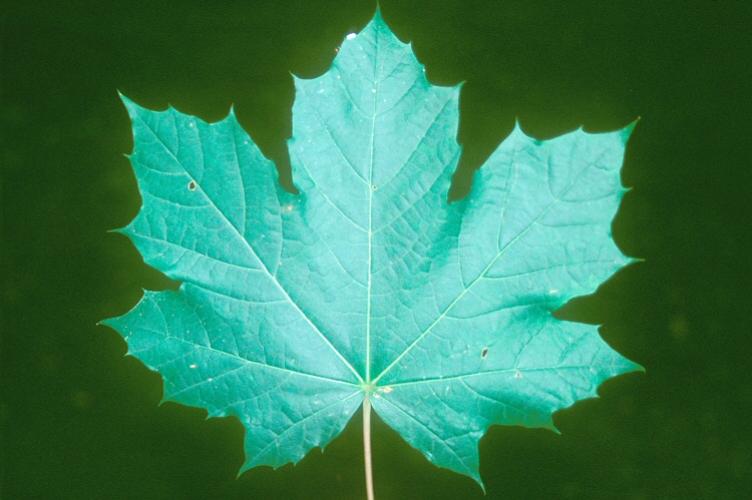
The Norway maple is a large, non-native deciduous tree that can grow up to 60 feet tall. Tolerant of many growing environments, the Norway maple has shallow roots and produces significant shade with its dense and rounded canopy. This makes it difficult for other plants to grow in the understory below. Its leaves are broad with five to seven lobes, often larger than the leaves of native maples.
Identifying Features
- The leaves are green and opposite. The leaves are typically broader than they are high, measuring about 4-7 inches wide. The leaves also possess 5 prominent lobes. In fall, the leaves turn a pale yellow.
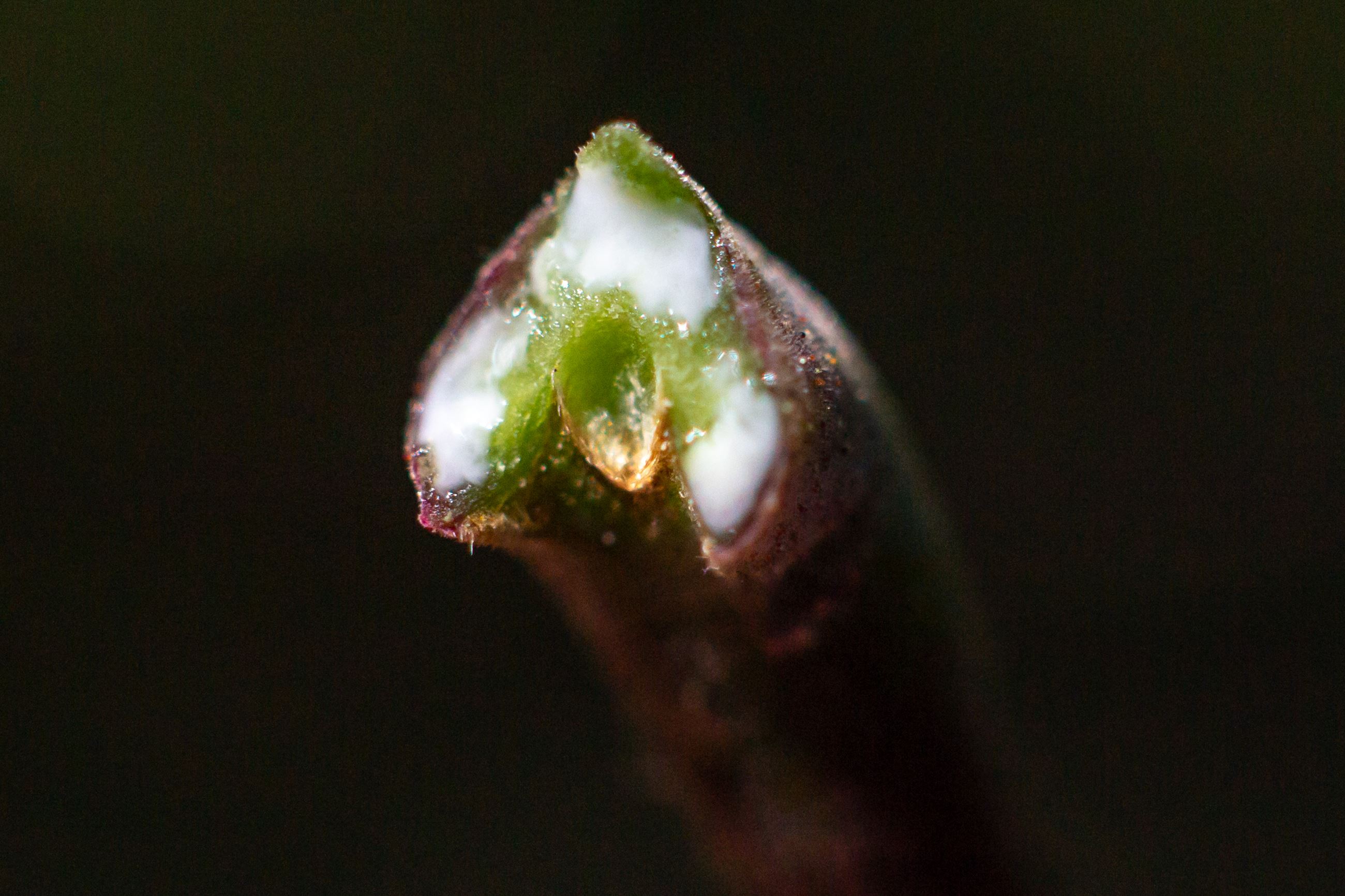
- The easiest way to distinguish norway maples from other maple species is to cut the petiole (leaf stalk) or vein. If a white milky substance oozes out, it is a norway maple.
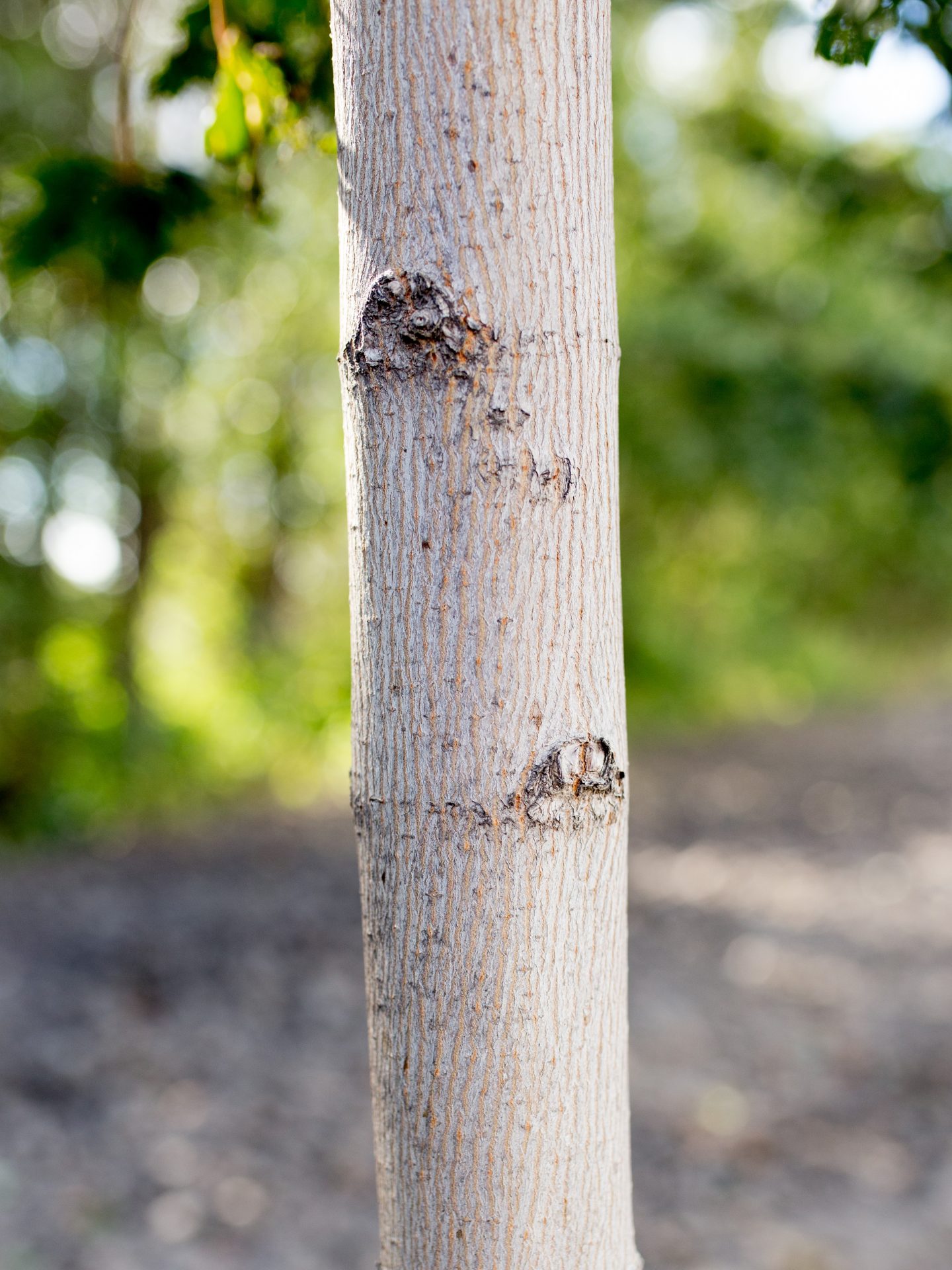
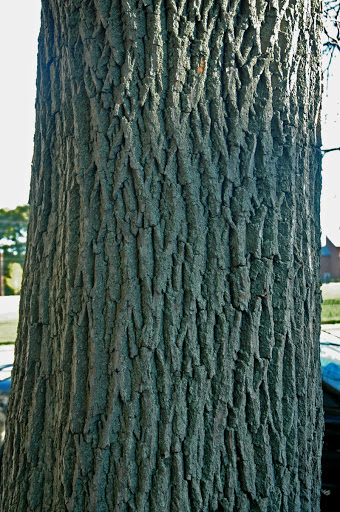
The bark is colored grayish black/brown, and furrowed. Younger trees have smooth, gray to light brown colored bark.
Bark of a young norway maple:
- Bark of a mature norway maple:
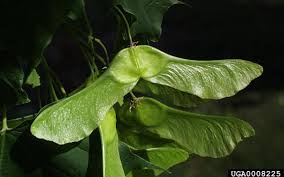
- The fruits mature in summer into samara (wing-shaped fruit to aid in wind dispersal). The wings are spread at a wide, near 180° angle.
Ecological Services
While norway maples do provide some basic benefits such as habitat and CO2 absorption, in North America it is classified as an invasive species. The tree was introduced from Europe/Western Asia in the mid-1700s and spread due to its popularity as an ornamental street tree. This is due to the fact that norway maples create dense monocultures that displace and outshade native trees, shrubs and herbaceous understory plants. Additionally, the presence of norway maples have been shown to lower wildflower diversity.
Animal Uses and Relationships
- The leaves can be fed on by numerous moth caterpillars
- The flowers are popular amongst various pollinator species
- The seeds are a popular food source for birds and small mammals
Fun Facts
- George Washington is said to have planted Norway Maples at Mount Vernon in the late 1700s.
- Norway maple sap is toxic and can cause skin irritation, unlike sugar maples
- Norway maples grow very quickly and can reach 40-60 feet tall, and in some case higher
- In fall, their foliage becomes a bright yellow with a reddish tint
Indigenous History/Uses
- Indigenous history with the norway maples is non-existent, as the tree was introduced in the 1700s by Europeans.
Conservation
References
Nowak, D. J., & Rowntree, R. A. (n.d.). History and range of Norway Maple. USDA Forest Service. https://www.nrs.fs.usda.gov/pubs/jrnl/1990/ne_1990_nowak_003.pdf
Woodland Trust. (n.d.). Maple, Norway (Acer platanoides). https://www.woodlandtrust.org.uk/trees-woods-and-wildlife/british-trees/a-z-of-british-trees/norway-maple/#:~:text=Norway%20maple%20can%20grow%20up%20to%2025m%20tall.&text=Its%20leaves%20are%20palmate%20with%20five%20lobes%20with%20a%20few%20pointed%20teeth.&text=It%20has%20bright%20green%20flowers%20growing%20in%20clusters%20of%20up%20to%2030.&text=Its%20bark%20is%20grey%20with%20fine%20ridges.
Norway Maple. NYIS. (n.d.). https://nyis.info/species/norway-maple/
Wikimedia Foundation. (2025, August 16). Acer platanoides. Wikipedia. https://en.wikipedia.org/wiki/Acer_platanoides