About White Ash (Fraxinus americana)
Summary
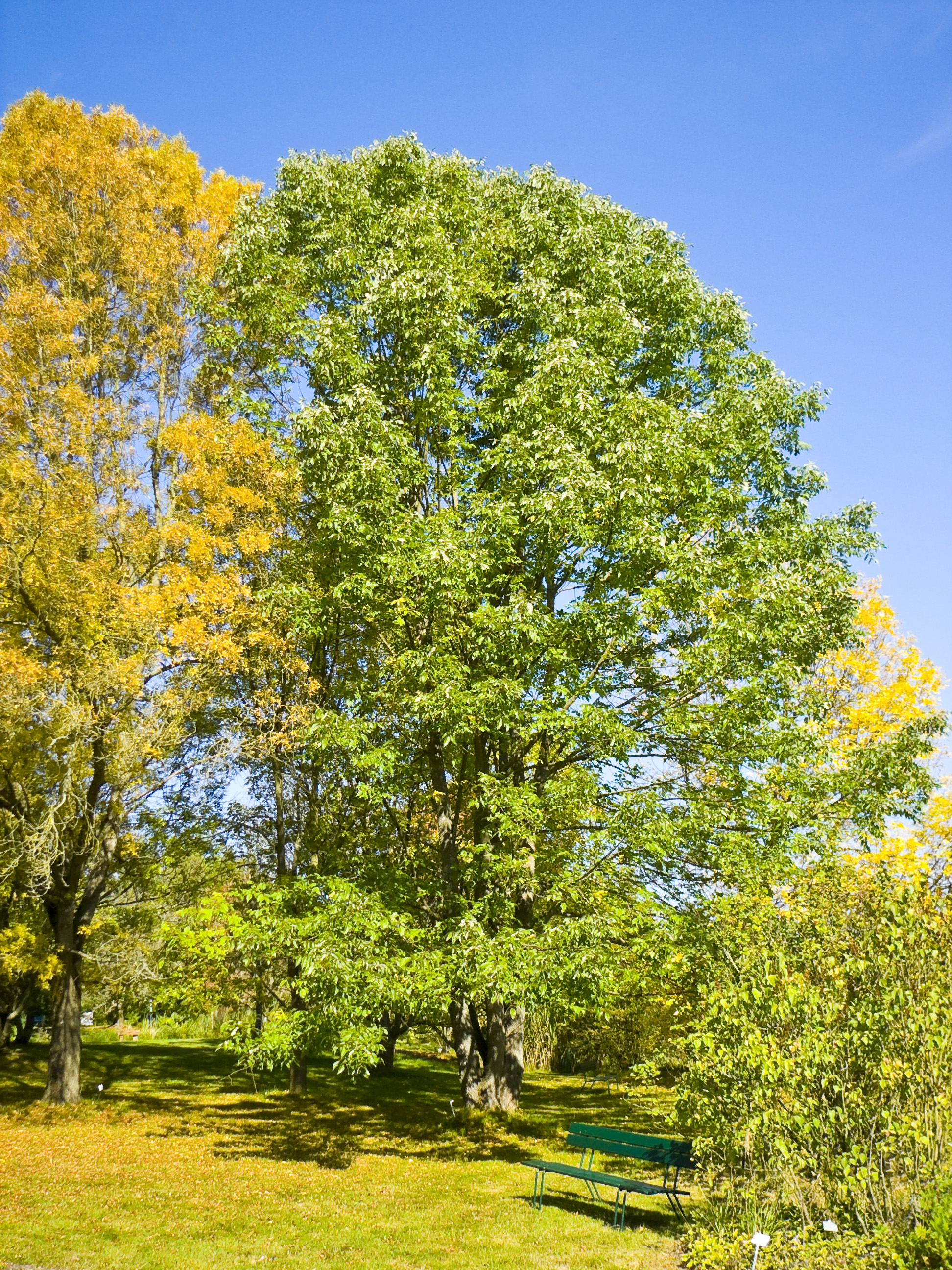
White ash is a common and useful species. Fast growing, White ash tends to be easily transplanted and established as it is resistant to deer, rabbits, drought, wet soil, urban conditions and fire. White ash typically grows in productive and nutrient-rich soils, and grows best in well-drained soils. White ash does not do well in poorly-drained lowlands, in these areas green or black ash tends to dominate instead. White ash sapplings are tolerant of shade, which allows for seedlings to establish and grow quickly in the understory to outcompete other shade tolerant trees. However, the trees become shade intolerant with age and need a canopy opening relatively early in its lifecycle in order to take advantage of its head start.
Identifying Features
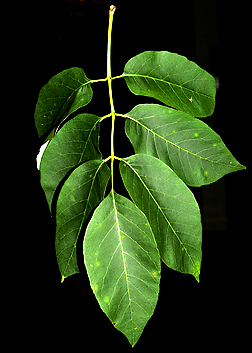
- The leaves are opposite and pinnately compound, meaning multiple leaflets are arrangd in two rows along a central stem (the rachis). Each leaf compound has 7 leaflets that are ovulate (short and circular) to somewhat lanceolate (long and narrow) and are 8-12 inches long. The leaves are hairless, green from above and paler from below.
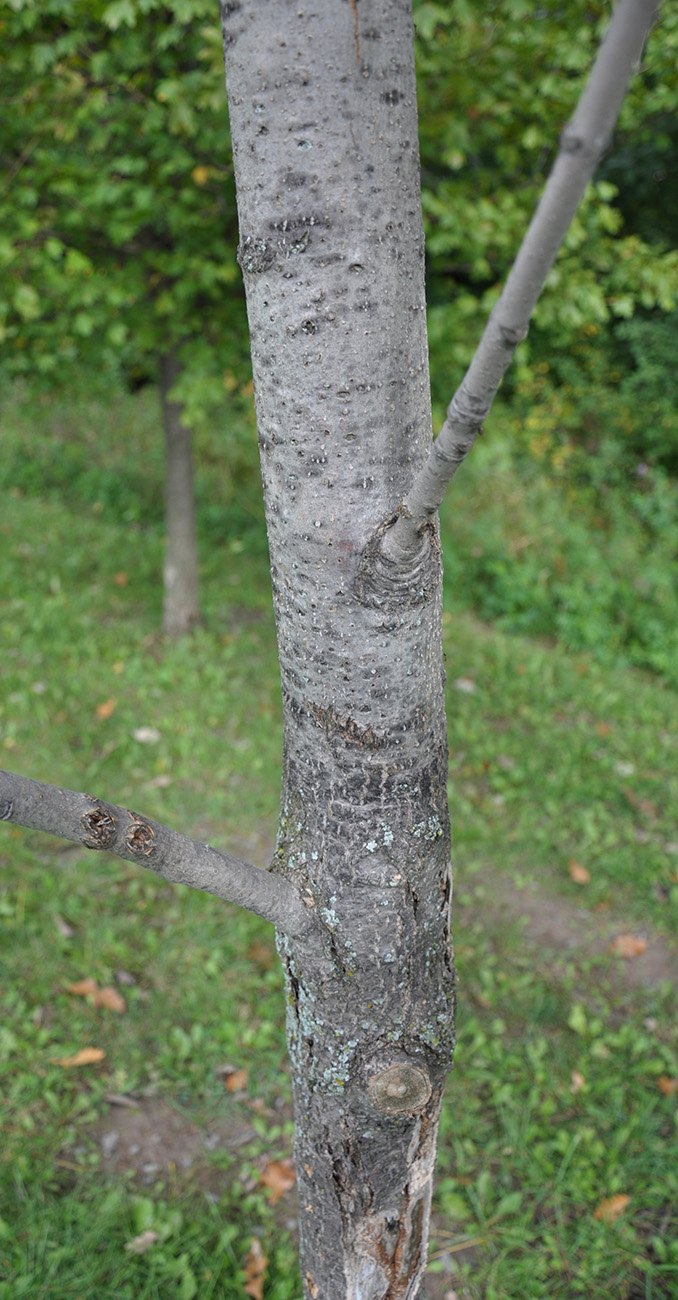
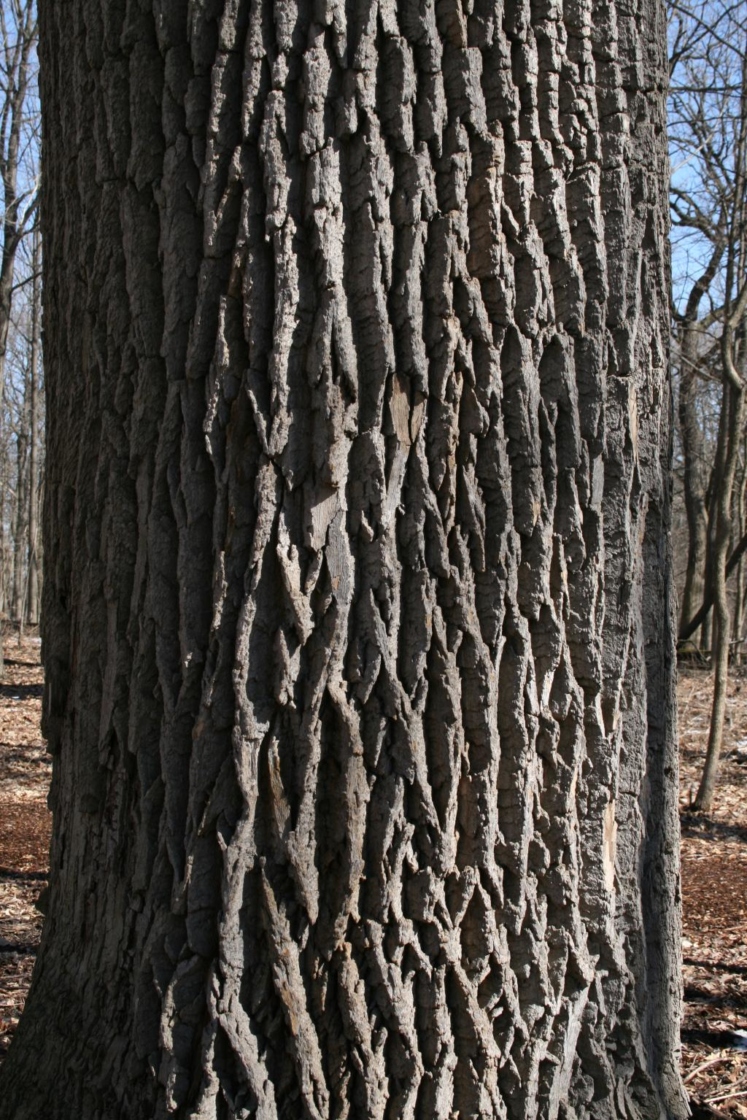
The bark of the white ash is an ashy gray to brown in color. The bark has interlacing corky ridges spanning its surface which form diamond shaped. Older trees may appear scaly. Young white ash bark is fairly smooth.
Young white ash bark:
- Mature white ash bark:
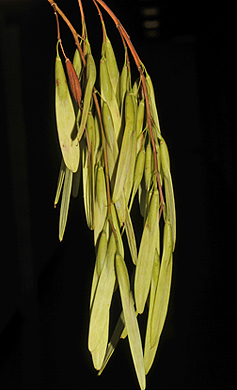
- The fruits of the white ash are one-winged samara (winged seed) and have a full, rounded seed cavity. Seeds mature in fall and disperse in winter. Dispersal of these fruits is dependent on wind, with each samara being able to travel as far as 500 feet from the tree (being carried just by wind).
Ecological Services
White ash trees provide a variety of critical ecological services. In some swamp regions white ash acts as an ecosystem engineer, as they thrive in tidal zones which can help create and sustain wetland habitats. The leaves and roots contribute to a healthy forest floor, and improve soil quality through nutrient cycling and water retention. The trees provide food and shelter for a wide range of animals. The leaves tend to leaf our later in spring than other species, allowing a more extended period of canopy openness and benefiting ground plants.
Animal Uses and Relationships
- The samaras (winged seeds) are a food source utilized by a variety of different animals, including wood ducks, finches, cardinals and fox squirrels
- White-tailed deer browse on the leaves of white ash
- Porcupines and beavers will eat the bark of young white ash trees
- White ash functions as a host tree for various insects
- Cavities form frequently in the truck of white ash, which are crucial for cavity-nesting birds such as pileated woodpeckers.
- These cavities are then utilized by secondary nesters, such as gray squirrels and owls
- White ash has a mutualistic relationship with morel mushrooms, engaging in nutrient exchange with their fungal networks
Fun Facts
- The wood of the white ash is traditionally used in creating baseball bats, due to its combination of strength, flexibility, and light weight. The wood was used in wagon wheels for the same reason.
- Nearly every Major League Baseball bat for most of the 20th century was made from wood sourced from white ash trees in New York and Pennsylvania.
- Autumn leaf coloration varies greatly between individuals, with colors ranging from deep purple to gold. Some trees even show a mix of colors.
- The wood of the white ash burns very hot and steady, making it a prized firewood tree.
Indigenous History/Uses
- Numerous medicinal purposes, including:
- Decoction of leaves used as a laxative, as well as a general tonic for women following childbirth.
- The seeds were used as a diuretic, appetite stimulant, a method to stop bleeding (a styptic) and a cure for fevers.
- Juice from the leaves was applied to mosquito bites as a method to reduce swelling & itching
- The inner bark was used to create a tea to remove bile from intestines as well as relieve stomach cramps and other ailments, as it possesses diuretic and laxative properties.
- The strength and elasticity of the wood made it an ideal wood for tools and implements
Conservation
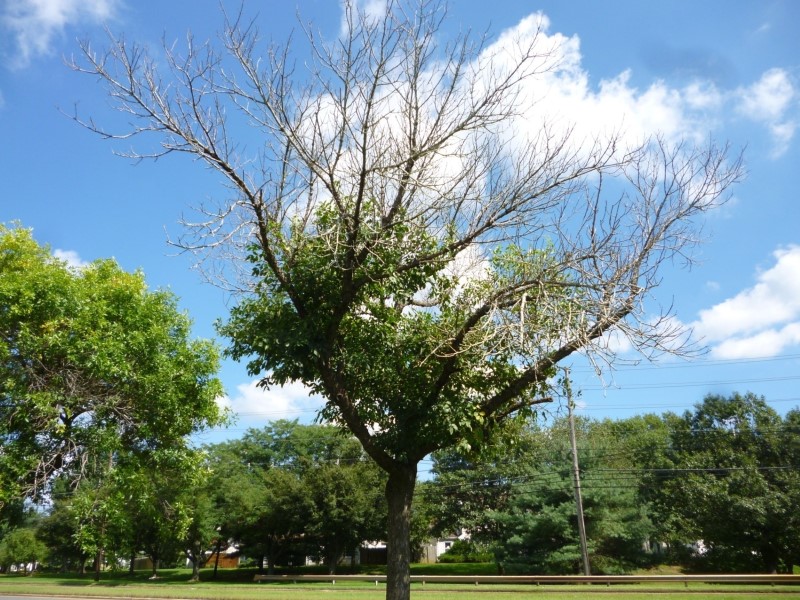
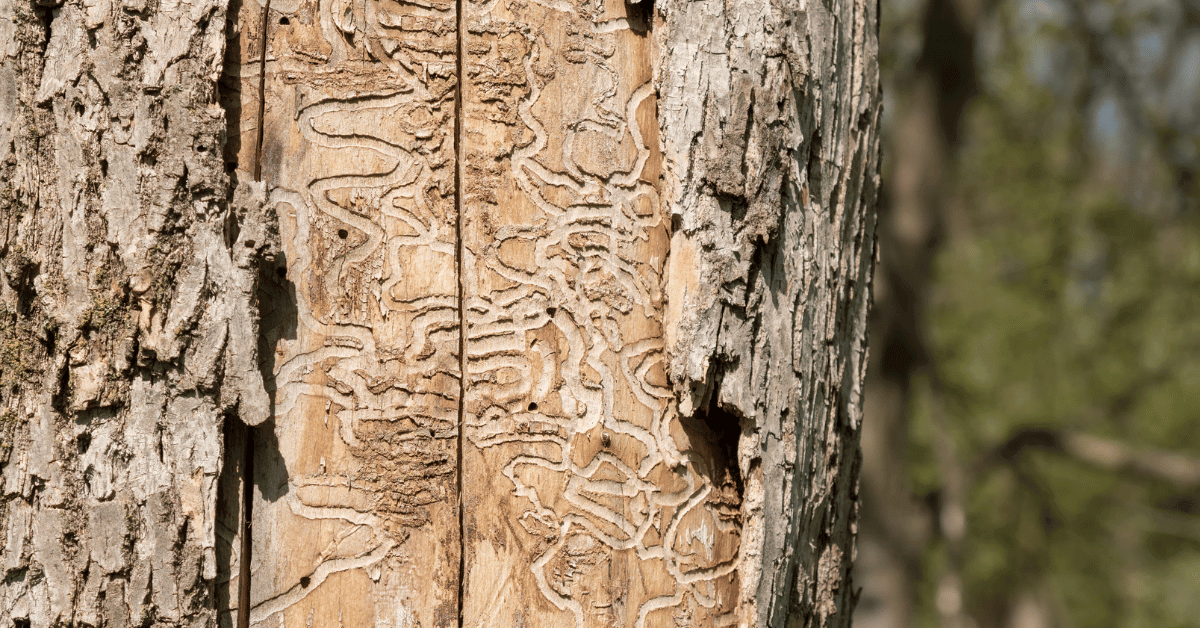
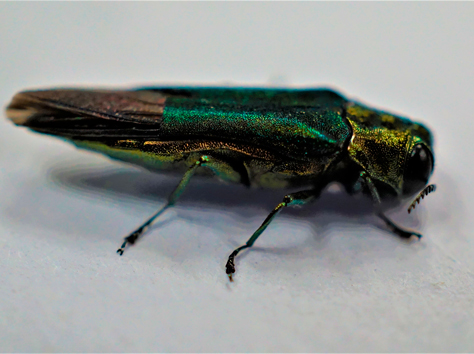
The International Union for Conservation of Nature (IUCN) gives the white ash a Critically Endangered classification. This classifiaction is not refelctive of the current state of the species, rather the projection of the future state of white ash populations. There is a projected decline of over 80% over the next 3 generations of the species. The primary driver of ash decline is the emerald ash borer (EAB), a jewel beetle (bupresitd) native to Eastern Asia. In its native range, the EAB fucntions as a secondary pest, meaning it feeds on a tree already in poor health (stressed due to drought, disease, etc.). However in North America, the EAB acts as a primary pest (feeds on and kills healthy trees) as the native ash trees lack defense mecahnisms present in Asian ash populaitons. This invasive wood-boring insect has killed tens of millions of ash trees in North America. The beetle will lay its eggs in the bark crevices of an ash tree, and when the eggs hatch the larvae will burrow into the tree and feed on the inner bark and phloem. This leads to a decline in the tree’s condition and eventually death for an infected tree. EAB threatens not only white ash, but the entire North American Fraxinus genus, which includes 7.5 billion trees. Signs of an infected tree are as follows:
Canopy Thinning:
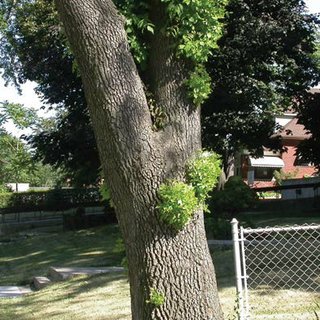
Epicormic Sprouting (growth of new shoots from under a tree’s bark on the lower trunk, the tree’s “last-resort” to survive by growing new leaves closer to the roots):
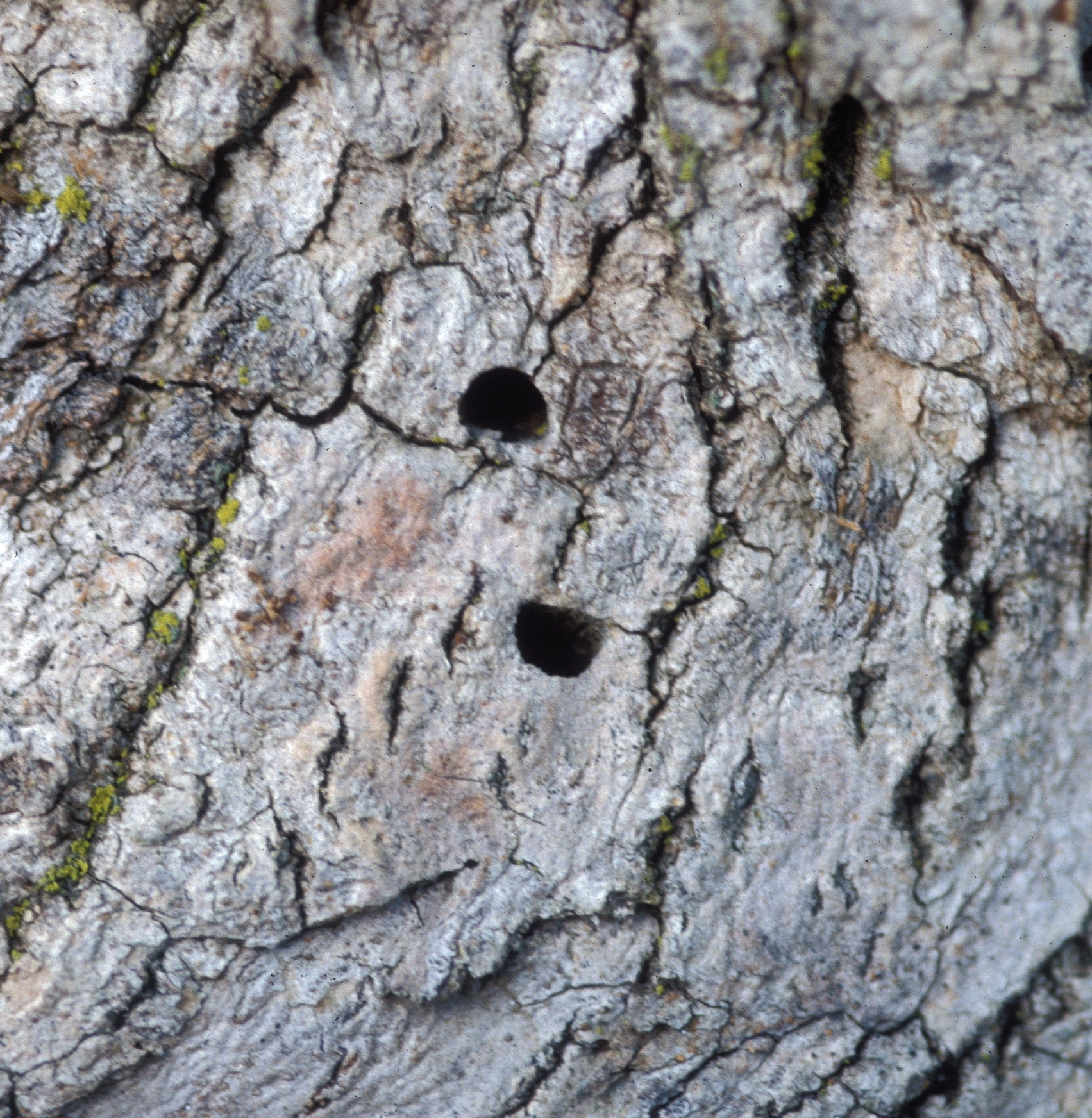
D-Shaped Exit Holes (resulting from adult beetles emerging from under the bark):
S-Shaped Tunnels Made by Larvae:
Adult Emerald Ash Borer Beetle:
References
U.S. Department of Agriculture, Natural Resources Conservation Service. (2002). White ash (Fraxinus americana L.) plant guide. National Plant Data Center & Biota of North America Program. https://plants.usda.gov/DocumentLibrary/plantguide/pdf/pg_fram2.pdf
Symptoms and signs of EAB. Emerald Ash Borer in Wisconsin. (2019, July 11). https://eab.russell.wisc.edu/signs-and-symptoms/
Wikimedia Foundation. (2025, October 23). Fraxinus americana. Wikipedia. https://en.wikipedia.org/wiki/Fraxinus_americana
New England Forestry Foundation. (2022, October 18). Meet the white ash. https://newenglandforestry.org/meet-the-white-ash/ New England Forestry Foundation
North Carolina Cooperative Extension. (n.d.). Fraxinus americana (American ash, white ash). North Carolina State University & North Carolina A&T State University. https://plants.ces.ncsu.edu/plants/fraxinus-americana/ plants.ces.ncsu.edu